What Is a Sticky Statement, and How Do I Write One?

The words jumped off the page and hit me right between the eyes. I searched for my highlighter and marked the statement with neon yellow. Next time I opened the book, my eyes went straight to those words again. They wrapped up everything God had been teaching me in one bold statement.
When we come across drop-the-mic moments in written words, we call it a sticky statement. It is a crafted sentence articulated with thoughtful insight and creative flow to make the reader stop and ponder what was said. It is highlightable.
Typically, this memorable statement comes at the end of a portion of reading to help the reader nail down the main point of what they have just read.
Sometimes you might find these statements at the beginning or already noted in a box or special bold place within a book or an article. A well-crafted portion of writing will have a sticky statement to hit home the main point toward the end.
If you want to create memorable and impactful sticky statements, there are a few ways to accomplish the task.
- Condense your main idea or point to one short sentence.
- Evaluate how you can change the wording of your sentence to roll off the tongue more smoothly. Ask yourself these questions:
- Can I say this more clearly?
- Can I say this in fewer words?
- Does the statement express the main point I want my reader to grasp?
- Are there more vibrant words I could use to make the reader see the point rather than me just saying it?
- Is the statement memorable?
- Could the statement stand alone on a graphic?
- Are there words I could change to make the statement more impactful?
- Are there words I could alliterate to make the message more alluring?
- Are there rhyming words that would work well to show rather than tell?
- Think about the things you highlight most, and consider what would make the reader highlight your statement.
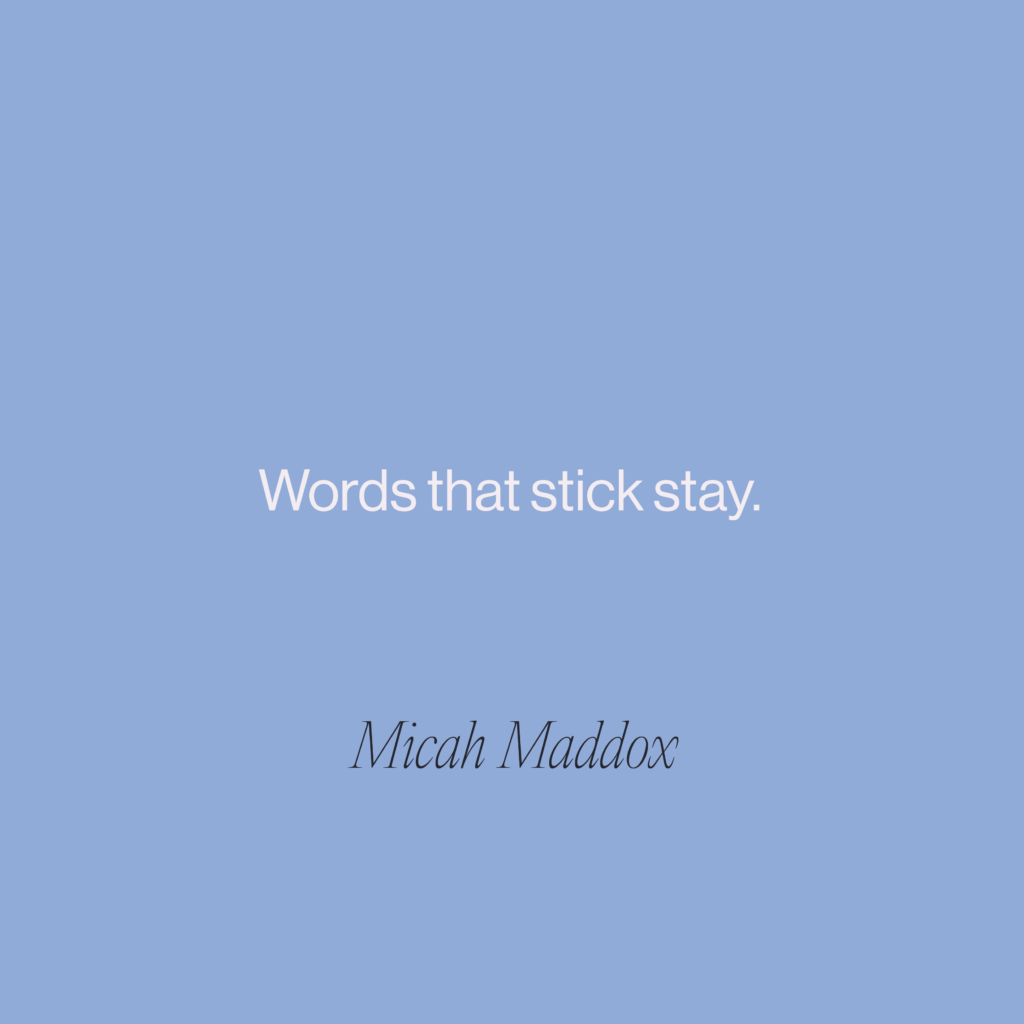
A sticky statement is meaningful, memorable, and masterfully written. It is using the art of words to make a message stick to the heart of the reader. Words are powerful. Words written with vulnerability and value stick.
By taking a little extra time and being thoughtful, you can write vibrant sticky statements! Rather than the reader just consuming another article, paragraph, or chapter, they will connect with you and desire more of what you have to offer. These highlightable moments tell the reader you get them and understand them.
Words that stick stay.
Blessings,
Micah Maddox
Practice writing a sticky statement for something you have recently written by using the steps and questions above. Share the topic and your sticky statement with us in the comments.





I love the direction you offer for crafting a sticky statement. Sometimes they just flow and sometimes they need a little help!
Thank you! I was immediately encouraged to look back over my recent, related writing prompts (“When is it not worth saving?” and “Worthless things” in Jeremiah 14:14 NKJV) and write a sticky statement:
“What’s worthless isn’t worthy of worship.”