

Should you keep writing if no one is reading?

I spent hours crafting what I thought was the perfect blog post. I wrote, rewrote, took some time and wrote again. Then I had my husband (who, granted, is not a writer but is an honest critic, at least) read over it, and he affirmed my thoughts; it was ready to publish.
So I designed an eye-catching Instagram post, crafted a clever caption, took a deep breath and posted. Excitedly, I sat back waiting for the likes, comments, saves and shares to flood in. I just knew any minute the post would go viral and everyone would be in awe of such an insightful article. I’d probably get speaking requests, invitations to join podcasts and even a book deal.
I may be exaggerating slightly, but the reality is I did expect a high level of engagement. My neighbor liked it. My mom wrote a comment, and my best friend saved it to read later … And then nothing. To say I was discouraged would be an understatement.
The next morning during my quiet time, I read the parable of the Pharisee and the tax collector in Luke 18:9-14. The Pharisee prayed an eloquent yet self-righteous prayer while the tax collector beat his breast and begged for mercy. Jesus then said this:
“… everyone who exalts himself will be humbled, but the one who humbles himself will be exalted” (Luke 18:14b, ESV).
I immediately sensed the Spirit’s conviction.
Promotion and platform-building are not necessarily tools for self-exaltation unless they’re coupled with self-righteous expectations and demands for recognition. This was the state of my heart. I had somehow believed the lie that my words deserved praise and glorification. In doing so, I forgot my calling and purpose for writing: to glorify God.
When it feels as if no one is reading your writing, here are two important reminders to take to heart.
1. Remember your calling.
Whether you’ve been writing for years or you are just getting started, the call to write is a call to go beyond yourself. It’s a call to create words designed to transcend time and space for the sake of glorifying the Lord and giving insight into His Kingdom. It is a gift and a responsibility.
In 1 Corinthians, Paul reminds us of our calling and of the One who paved the way.
“For consider your calling, brothers: not many of you were wise according to worldly standards, not many were powerful, not many were of noble birth. But God chose what is foolish in the world to shame the wise; God chose what is weak in the world to shame the strong; God chose what is low and despised in the world, even things that are not, to bring to nothing things that are, so that no human being might boast in the presence of God.” (1 Corinthians 1:26-29, ESV)
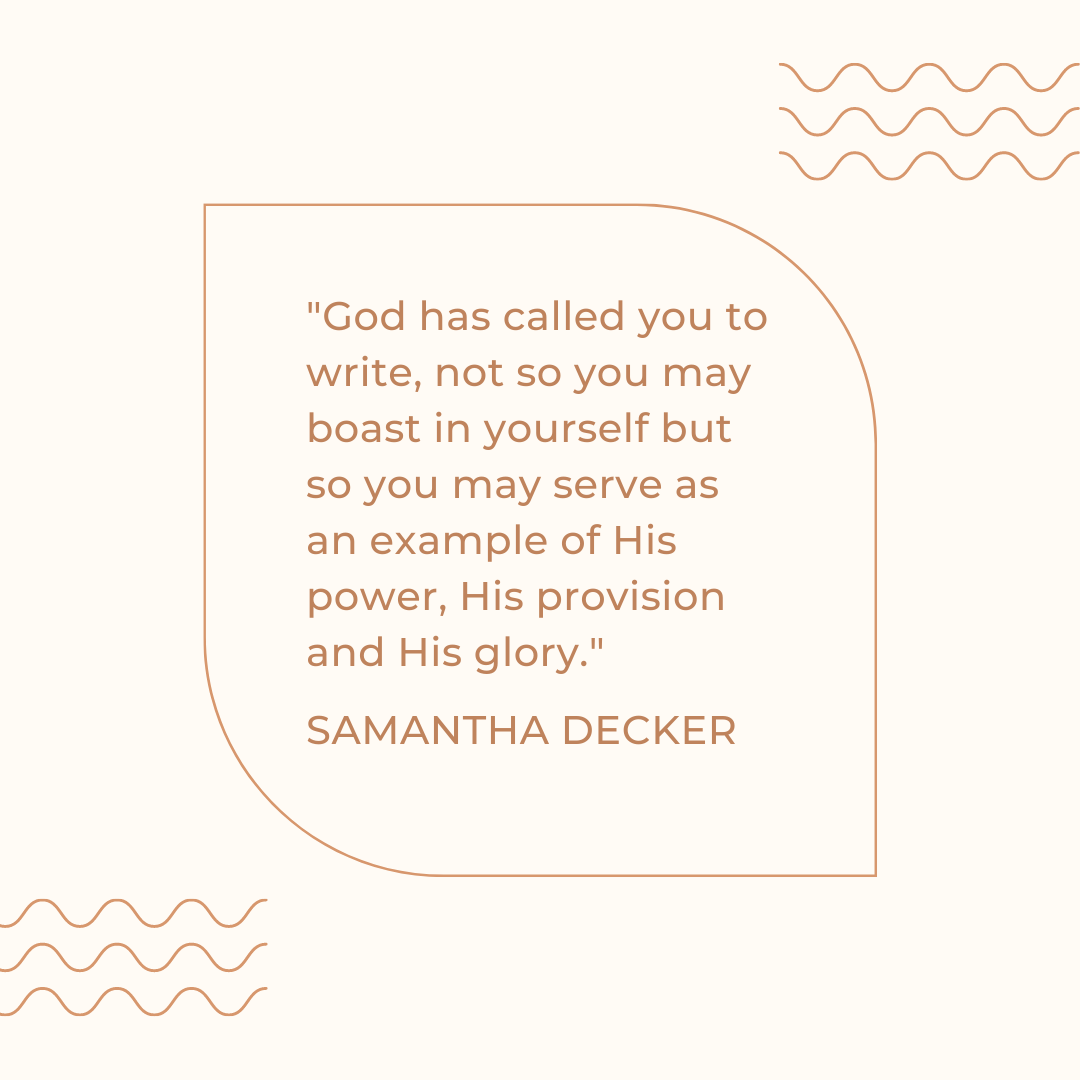
God has called you to write, not so you may boast in yourself but so you may serve as an example of His power, His provision and His glory.
2. Wholly follow the Lord your God.
In Joshua 14, Caleb reflects on his journey to spy out the promised land. He remembers, “my brothers who went up with me made the heart of the people melt; yet I wholly followed the LORD my God” (Joshua 14:8, ESV).
Caleb clung to the promises of the Lord. He chose obedience even when those around him did not and the circumstances looked dire.
An invitation to write is a call to remain faithful and cling wholeheartedly to the promises of God. The response of others and the circumstances around you should have no bearing on your obedience.
So should you keep writing if no one is reading? Or if you can count your newsletter subscribers on one hand? Or if friends and family members make up the majority of your social media followers? Yes. Wholeheartedly, yes.
Take heart, friend: “He who calls you is faithful” (1 Thessalonians 5:24, ESV).
Blessings,
Samantha Decker
Have you struggled with wondering if your writing even matters? You are not alone! Drop a comment below. I would love to pray for you!


Responses